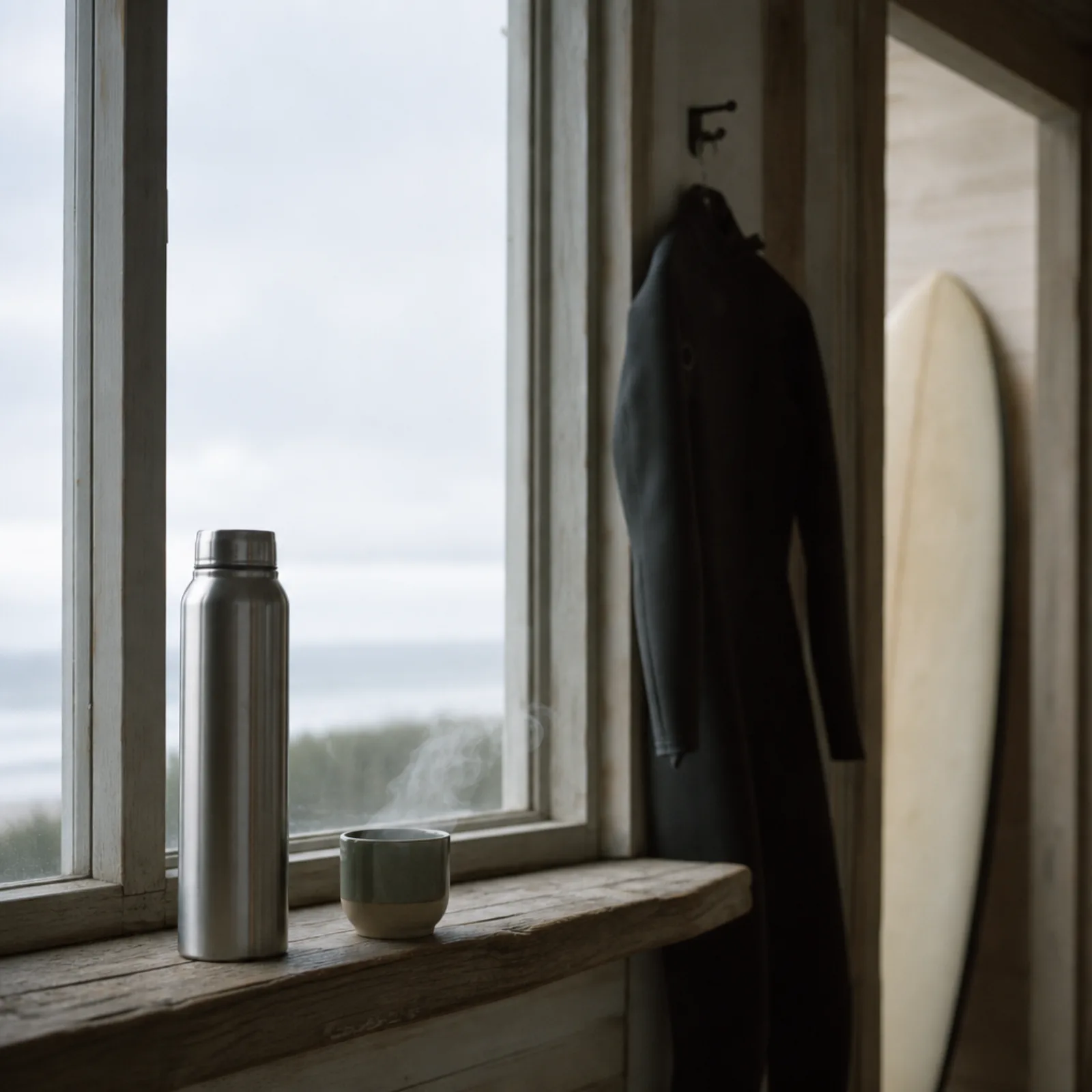
A short, light pour meant for clarity, not a jolt — the same reason surfers who watch the lineup before dawn tend to reach for tea rather than a second coffee.
Why tea, not a second coffee
Dawn patrol runs on very little sleep and a lot of anticipation. Coffee alone tends to deliver that anticipation as a spike — useful for getting out of bed, less useful for standing at the water’s edge trying to read a set. Tea carries caffeine too, but alongside it comes L-theanine, an amino acid that shows up in almost no other food or drink in any meaningful quantity. The two together are commonly described as producing a calmer, more sustained kind of alertness than caffeine on its own — the kind of state that suits watching a wave build rather than reacting to a car horn.
None of this is a medical claim, and it isn’t unique to any one leaf — the caffeine/L-theanine ratio simply varies by tea type and how it was processed. What matters for a pre-surf cup is keeping the pour short and the volume small: a few minutes of steep, one or two small cups, finished with enough time that you’re not walking to the water still holding a mug.
What actually goes in the cup
Lower-caffeine white teas are the easiest choice for an early start — light in the stomach, quick to steep, easy to drink cool if the kettle takes too long. A GABA-processed oolong is the next step up if you want more body without more jitters; the processing method is specifically aimed at a calmer amino-acid profile. What we wouldn’t reach for at 5am: a high-caffeine red tea or a smoky, roasted oolong — save those for after the session, when the day has already started and a stronger cup does more good than harm.