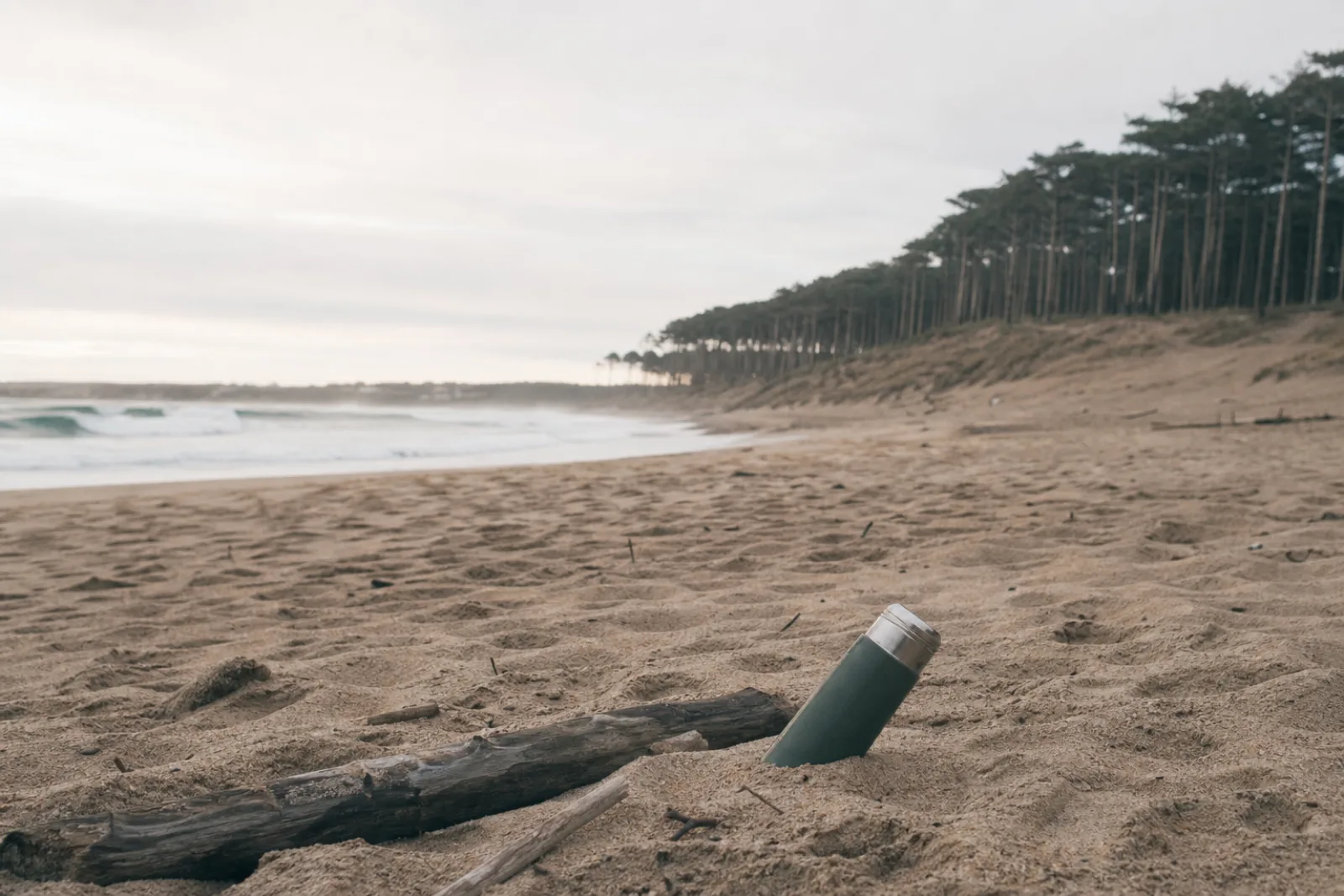
A stretch of shifting sandbank beach breaks on France's south-west coast, home to some of the heaviest, most competition-tested waves in Europe.
The wave
Hossegor sits on France’s Landes coast, backed by pine forest and shaped by sandbanks that shift with every autumn swell, producing some of the most powerful, hollow beach breaks in Europe. La Gravière is the best known of them — a heavy, fast-breaking wave that has hosted top-level professional competitions for years — but the whole stretch, from Les Culs Nus down to the Seignosse breaks, tends to deliver more consistent, punchy surf than its modest town suggests. Late summer into autumn is generally the more powerful window here, when the Atlantic swells start lining up against the sandbanks.
Behind the beach, the town is low-key and pine-shaded, more surf-industry than resort — board shapers and wetsuit brands alongside the usual beach cafés.
The tea note
France has its own tea culture, mostly built around flavoured black-tea blends rather than the single-origin Chinese leaf this ritual is about, and the town’s actual drink of choice, beach or otherwise, is coffee. Nothing here changes the practical shape of the ritual: a cold-brewed, medium-caffeine tea carried in a bottle for the lulls between the sandbank’s heavier sets, no different from what the same kit would do at any other beach break.