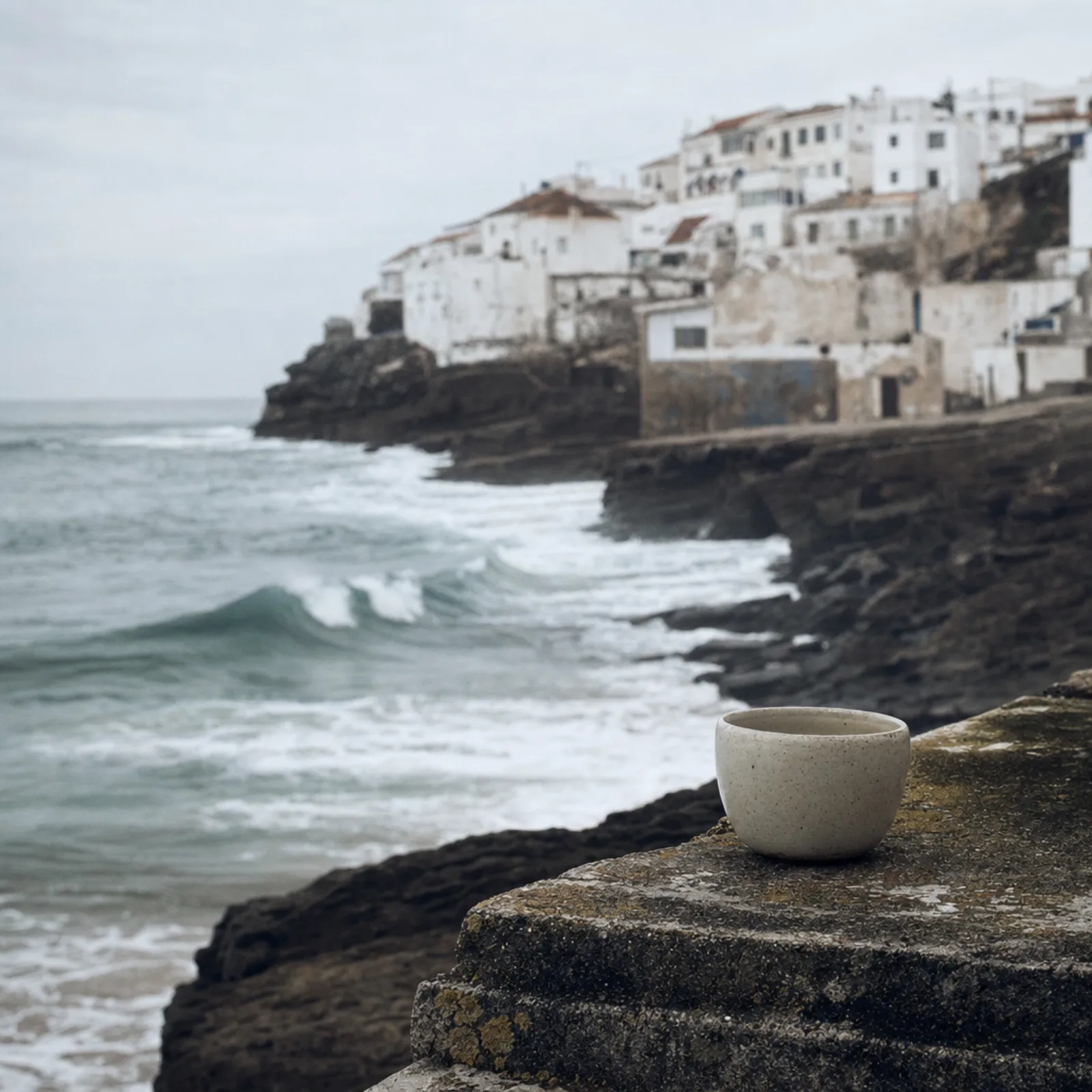
A short stretch of Atlantic coast north of Lisbon holding seven distinct breaks, recognised in 2011 as Europe's first World Surfing Reserve — and a fishing town that runs on espresso, not gaiwan.
The wave
Ericeira is a small fishing town on Portugal’s Atlantic coast, about forty minutes north of Lisbon, built around a cluster of point and reef breaks tight enough together that surfers move between them on foot or by scooter within a single session. Coxos is the best known — a fast, powerful right widely regarded as one of the best waves in Europe — alongside Ribeira d’Ilhas, a longer, more forgiving right that’s hosted world-tour competitions, and São Lourenço, a quieter option on the same stretch of coastline. In 2011, the area was designated Europe’s first World Surfing Reserve, a formal recognition of the quality and density of breaks along a few kilometres of coast.
The town itself is compact and unhurried outside of peak summer — whitewashed houses, a working fishing harbour, and a swell that rarely goes fully flat for long.
The tea note
Portugal’s own tea history is genuinely interesting — it was a Portuguese princess, Catherine of Braganza, who’s often credited with popularising tea drinking at the English court in the 17th century — but that’s a story about export history, not a living Chinese tea culture in a Portuguese fishing town today. What travels well here is the during-surf side of this ritual: something cold-brewed the night before, carried down to whichever break is working, drunk in the lulls between the reserve’s seven names for the same stretch of Atlantic.